← Work
Retired product · 2026 Pixelhatch R&D

Your experience wasn’t the problem. The way it got read was.

Battlecat was a career signal repair product built for senior creatives whose experience was broad, layered or difficult to place inside modern hiring systems.

It became a real working product: free diagnosis, paid evidence-backed role-lane mapping, private report access, payments and an admin intelligence system for maintaining the market language behind the recommendations. It reached soft launch, but not enough people pulled it into their lives to justify running another standalone product indefinitely.

So Battlecat gets a better ending: retired from the product shelf, preserved as proof of the thinking and the build.

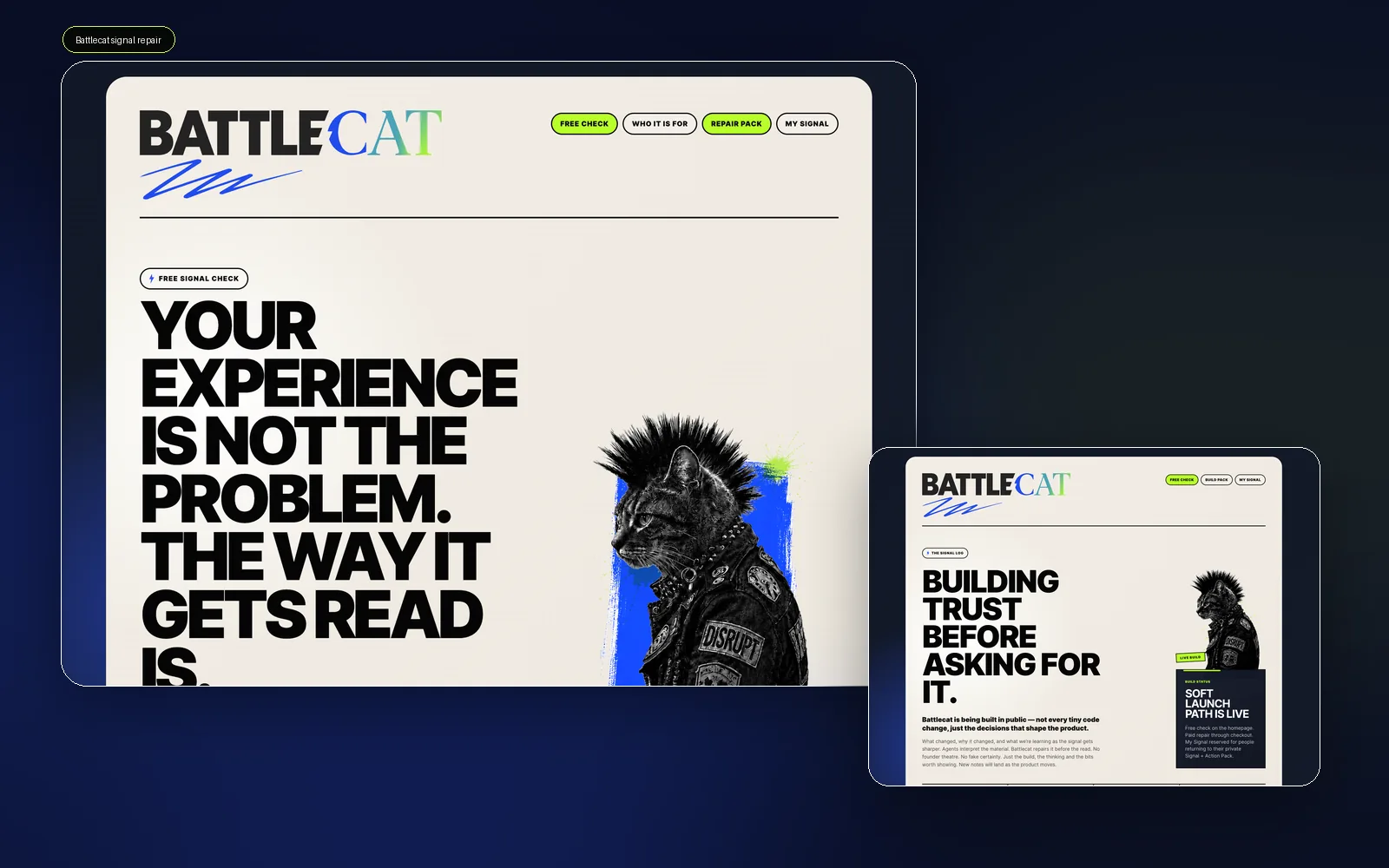
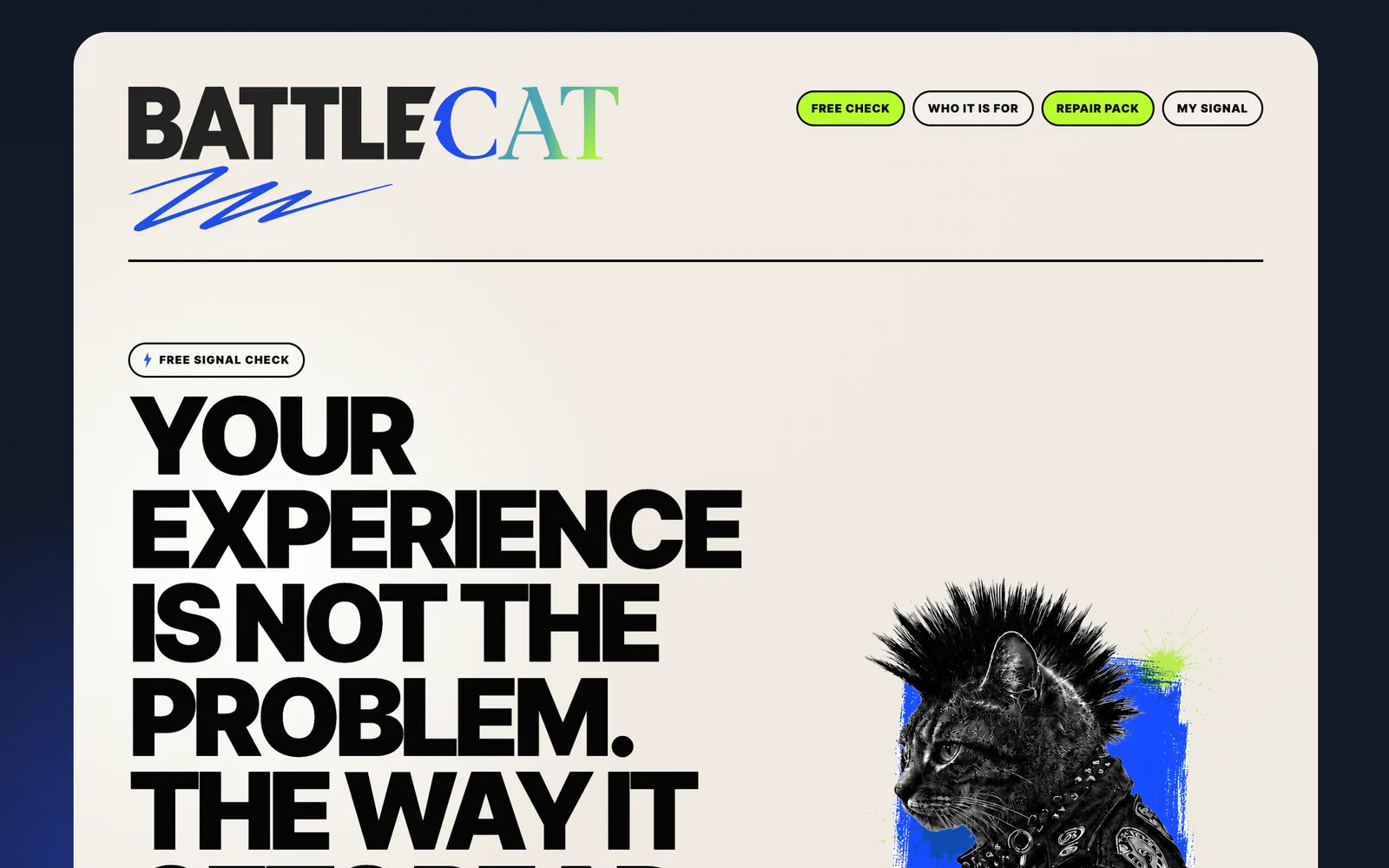
Battlecat product interface shown across desktop and tablet views
What it wasCareer signal repair
First audienceSenior creatives
Stage reachedWorking soft launch
StatusRetired · case study

The problem

Strong careers can still produce a weak first read.

Senior creative careers rarely stay neat. Titles change between companies. Strategy, leadership, design, production and digital work overlap. The more experienced someone becomes, the easier it can be for a résumé, LinkedIn profile or hiring system to flatten all that nuance into an old title or a vague generalist read.

Battlecat started from a different question than a résumé optimiser: what roles can the evidence actually support? The product was designed to diagnose the current signal first, then distinguish between credible lanes, stretch lanes and directions that still needed proof.

Product snapshot

The free check was the front door.

Short input. No forced account. A useful first read before asking for money or a full résumé.

Battlecat free role lane check landing interface

What was actually built

More than a clever landing page.

The repository shows a fairly complete product system. These are the pieces worth preserving.

01

Free Role Lane Check

A low-friction diagnostic designed to show how someone’s current material reads before asking them to rewrite anything. It looked for credible role lanes, buried strengths, missing evidence and places where the reader had to guess.

app/page.tsx · components/SignalCheckForm.tsx
02

Role Lane + Action Pack

The paid layer moved from diagnosis into repair: guided evidence intake, best-fit and stretch role-lane testing, proof gaps, positioning direction, repair priorities and evidence-backed copy outputs.

components/SignalActionPackTool.tsx
03

Signal Intelligence Desk

A deliberately human-reviewed admin system for building the role intelligence behind the product. Job ads, role titles and research notes were staged as candidates, reviewed, promoted into an approved library and tracked by source health.

components/SignalIntelligenceDesk.tsx
04

Trust before optimisation

Battlecat was built around a hard constraint: never invent experience. Privacy guidance, evidence requirements, title validation rules and manual review were part of the system because a career tool that confidently fabricates a better story is worse than useless.

db/migrations · lib/signal-intelligence · SignalActionPackTool.tsx
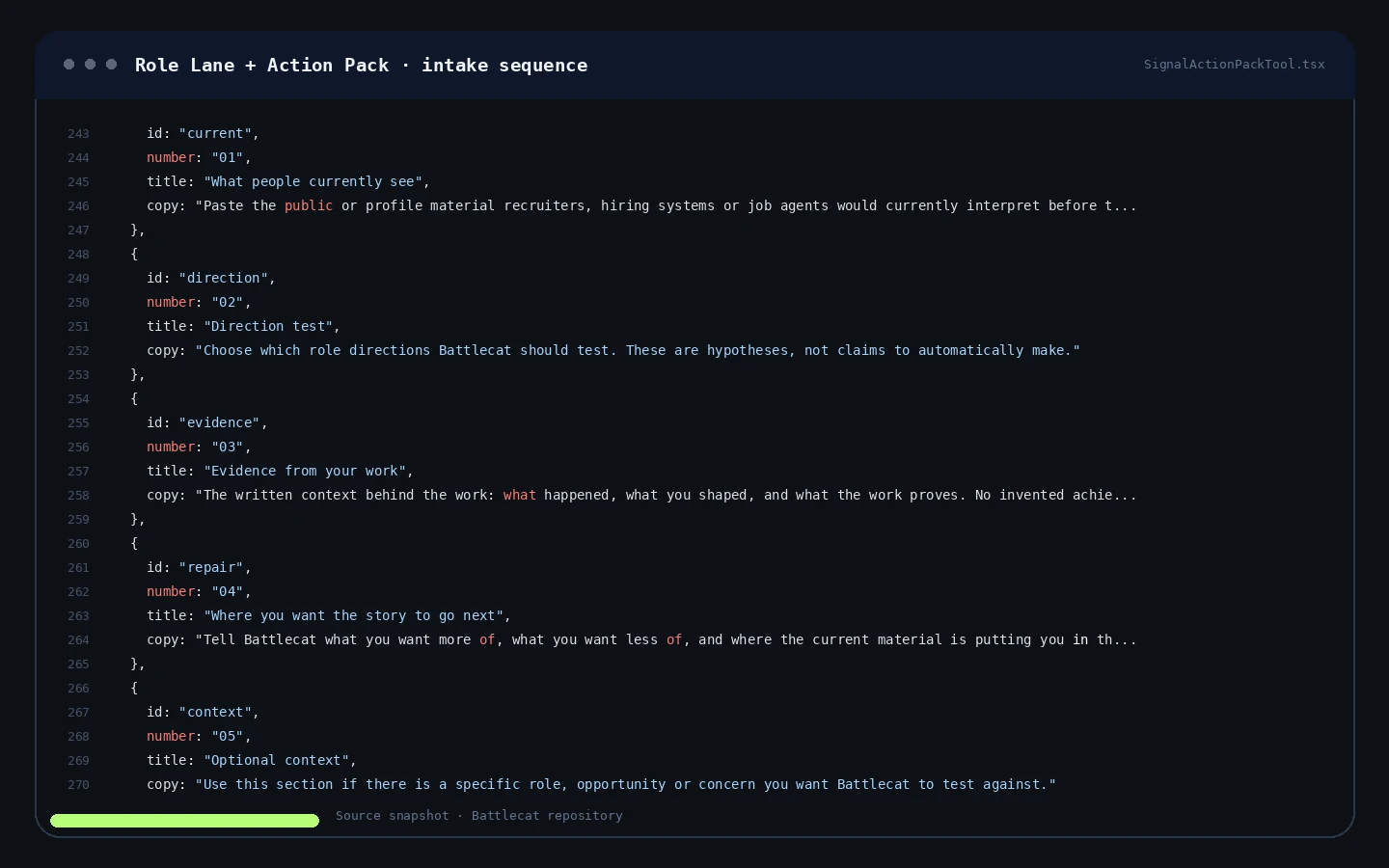
Source code snapshot showing the Battlecat Role Lane and Action Pack intake sequence
Source snapshot: the paid intake sequence was explicitly structured around current read, direction, evidence, repair and context.

Paid repair layer

Diagnosis was free. Repair needed evidence.

The Action Pack deliberately asked for the material behind the headline: role history, work evidence, desired direction and optional opportunity context. The system could then challenge a desired lane instead of blindly validating it.

  • Best-fit and stretch role-lane map
  • Evidence gaps for the roles being tested
  • Positioning anchor and repair priorities
  • LinkedIn, résumé and portfolio direction
  • Multiple report builds to refine the evidence
Battlecat paid evidence intake and repair brief interface
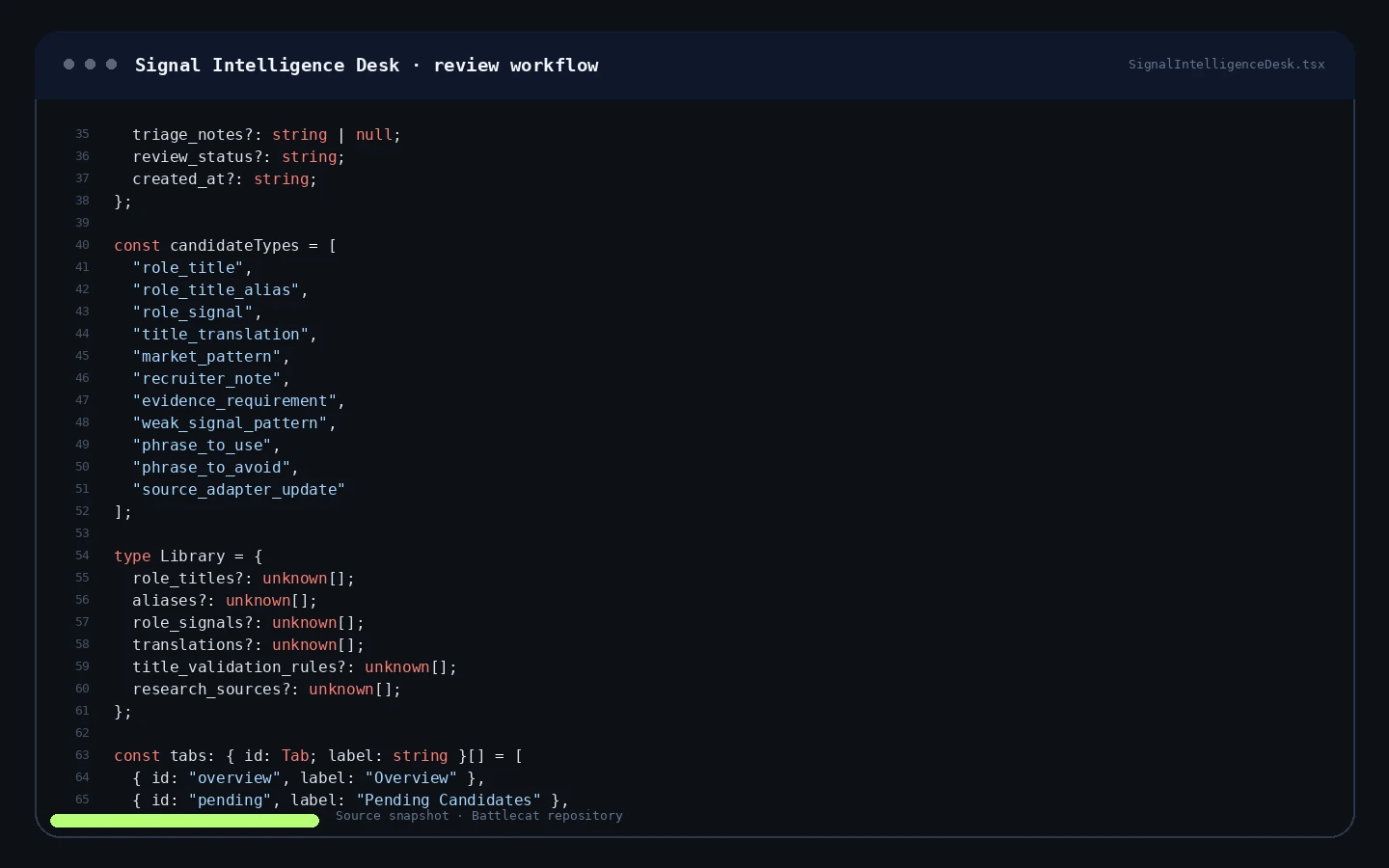
Source code snapshot showing Battlecat signal intelligence candidate types, approved library and review workflow
Source snapshot: market signals were staged and reviewed before they could influence the product.

The invisible product

The recommendation layer had its own control room.

Battlecat did not treat job-market language as a static prompt. The admin side staged new titles and signals before they could influence outputs, separated restricted/manual sources from permissioned fetching and retained a chronological review trail.

That mattered because the product was making recommendations about people’s careers. The system needed a way to say “we do not know yet” rather than allowing the model to make the market up.

Stack

A proper little software product.

Next.js 15 + React 19Supabase auth, database and RLSStripe Checkout + entitlement flowCloudflare Pages FunctionsMagic-link access for private reportsHuman-reviewed signal intelligence library

Built in public

Battlecat kept a signal log while it was being built.

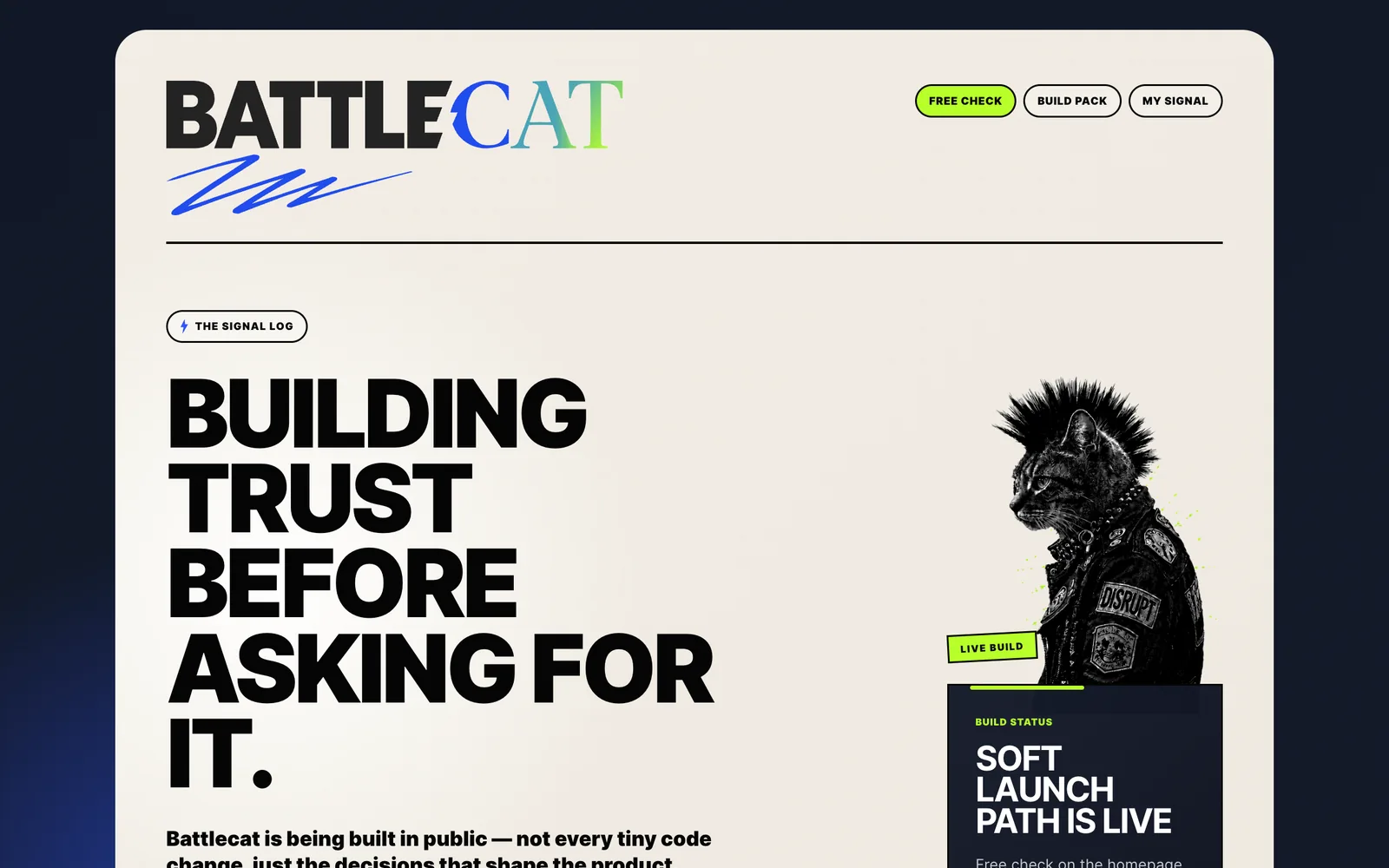
The log exposed meaningful changes, what was being tested and what was still rough. It was part trust device, part launch diary and part reminder that a real product evolves in front of people.

Battlecat Signal Log interface documenting the soft launch build

Why retire it?

A working product still has to earn the right to stay alive.

Battlecat worked technically and the core product idea still holds up. What it did not create was enough market movement to justify the maintenance, support, infrastructure and attention that comes with keeping a separate product alive.

That decision is part of the case study too. Shipping is useful. Knowing when not to keep feeding something is useful as well. The code, product logic, trust patterns and role-lane thinking remain available to Pixelhatch; the standalone product no longer needs to compete for oxygen.

The useful part survived. The overhead didn’t.

Battlecat · 2026

Find your role lane. Build the proof. Stop being under-read.

Not a bad little life for a cat.